
No.1 2026
CONTENTS
The “Second Integration” from a Philosophical Perspective //Li Yi
On the Internal Relationship Between Practicing the Four Global Initiatives and Advancing:the Building of a Community with a Shared Future for Mankind //Wu Zhicheng
The Inherent Requirements and Fundamental Pathways for Advancing the Theoretical Elaboration of the Party’s Innovative Theories //Tao Wenzhao
An Eco-Civilization Interpretation of the New Form of Human Civilization //Luo Xianyu
Research on the Chinese Compilation and Translation of Classical Marxist Works: Engels’ Major Contributions to the Editing and Publication of Volume III of Capital (Part II)//Zhang Hongshan & Liu Jia (trans.); Wang Xijun (ed.)
Upholding the Correct Direction of Economic Globalization: An Analysis Based on Marx’s Thought on Economic Globalization //Zou Shipeng
The Method of Writing Capital and Its Implications for the Study and Interpretation of the Party’s Innovative Theories in the New Era // Zhu Bingyuan
Value Creation and Socioeconomic Transformation: A Contemporary Reflection on Marx’s Critique of Machinery // Wang Zhongru
The Socialist “New Man”: From the Theoretical Foundations of Marx and Engels to Lenin’s Practical Deepening //Luan Chunyu
A Historical Interpretation of Engels’ Concept of “Nature”: On the Natural Dimension of Marxist Philosophy of History // Jin Xingyu
Marx on the Regression of Bourgeois Democracy: An Analysis Based on The Eighteenth Brumaire of Louis Bonaparte // Guo Yanchao
The Signature Categories of Xi Jinping Thought on the Economy: Generative Logic, Systematic Construction, and Historical Contributions // Jiang Yongmu & Zhang Xiaolei
Beyond Technological Determinism and Institutional Determinism: The Terminologica Transformation of New Quality Productive Forces // Liu Shun
The Origins and Modern Structure of the Intra-Party Normative System //Liu Honglin
The Logical Structure, Value Implications, and Paths for Improvement of the Institutional Normative System of the Party’s Self-Reform //Zang Xiuling
On the Definition of Several Fundamental Concepts in Political Communication //Feng Shuping & Luo Hongtie
Emotional Dependence in Political Communication//Chen Zongquan & Zhang Yi
The Spatial Discipline of Platform Capitalism and Its Corrective Mechanisms //Wang Huan
A Critique of the Participatory Culture Industry in the Era of Digital Capitalism //Zhang Jieyu & Liao Xiaoqin
Techno-Feudalism and Its Critique from the Perspective of Justice // Wei Chuanguang
The Marxist Theory of the Labor Aristocracy: Evolution, Debates, and Contemporary Relevance // Liu Yaohui
Is the Integration of Cryptocurrency and Socialism Possible? A Critique of the Discourse on Blockchain Socialism // Liu Jiangbin
Integrating Marxist Theoretical Research with the Study of Major Contemporary Economic
and Social Issues: A Review of the 22nd National Marxist Forum and the 2025 Annual Conference of the China Marx and Engels Research Association // Chang Xiaoqing
Focusing on Recommendations for the 15th Five-Year Plan and Advancing the Systematic and Rigorous Theoretical Elaboration of Chinese Modernization: A Review of the Joint Session of the Academic Symposium on the Guiding Principles from the Fourth Plenary Session of the 20th CPC Central Committee and the Second Young Marxist Forum //Zhao Xiaona
Key Research Directions for 2026
MAIN ABSTRACTS
The “Second Integration” from a Philosophical Perspective
Li Yi
Exploring the status and function of the “Second Integration” at the philosophical level is of significant practical importance for achieving a deeper understanding of its character as a major theoretical innovation. From the perspective of worldview, the “Second Integration” is the inevitable outcome of properly addressing the relationship between “tradition” and “modernity.” It constitutes a profound reflection on, and rational transcendence of, such viewpoints as “Westernization theory” and cultural conservatism. At the same time, it is an inherent requirement of upholding and developing Marxism, addressing the fundamental question of the ideological and cultural foundations of our convictions. As a necessity arising from historical development, the “Second Integration” is grounded in the intrinsic commonality of human thought. From the perspective of values, the continuity, innovativeness, unity, inclusiveness, and peaceful orientation of Chinese civilization together form its distinctive value system. In this sense, the “Second Integration” is not merely a synthesis at the level of ideas or theory, but a profound fusion of Marxist values with the values embodied in Chinese civilization. Through this fusion, a historical leap from tradition to modernity is achieved, giving rise to the modern form of Chinese civilization. From a methodological perspective, “integration” functions both as a theoretical generalization of objective laws and as a scientific method. It represents not only a mode of theoretical innovation but also a practical approach to social transformation. By reinforcing cultural subjectivity, the “Second Integration” enables us to take the initiative in the domains of thought and culture, thereby exerting a strong and sustained influence on the development of the path, theory, and institutional system of socialism with Chinese characteristics. On the new journey in the New Era, it is imperative to further promote the creative transformation and innovative development of fine traditional Chinese culture, to remain firmly rooted in the great practice of socialism with Chinese characteristics, and to deepen the exploration and articulation of the intellectual essence of the best elements of traditional Chinese culture, so that the new culture formed through “integration” may become the cultural form of Chinese modernization.
On the Internal Relationship Between Practicing the Four Global Initiatives and Advancing the Building of a Community with a Shared Future for Mankind
Wu Zhicheng
The Global Development Initiative, the Global Security Initiative, the Global Civilization Initiative, and the Global Governance Initiative all focus on the future and destiny of humanity. They are mutually reinforcing and interdependent, together constituting the four foundational pillars of the edifice of a community with a shared future for mankind. The Global Development Initiative addresses issues concerning human survival, development, and national modernization, thereby laying a solid material foundation for advancing the building of a community with a shared future for mankind. The Global Security Initiative concentrates on questions of war and peace, conflict and stability, providing the fundamental prerequisite for this endeavor. The Global Civilization Initiative focuses on overcoming division and misunderstanding while fostering inclusiveness and mutual trust, thus forging the essential intellectual underpinning for a community with a shared future for mankind. The Global Governance Initiative targets global risks and challenges as well as deficits in global governance, strengthening the institutional safeguards for its realization. With China’s active promotion, the Four Global Initiatives have achieved positive results in forging international consensus, developing multilateral cooperation mechanisms, and advancing practical cooperation. They have propelled the vision of a community with a shared future for mankind from a Chinese proposal into an international consensus, from a guiding concept into collective action, and from an aspirational vision into rich and substantive practice-vividly demonstrating China’s sense of responsibility and commitment to jointly building a better future for humanity.
The Inherent Requirements and Fundamental Pathways for Advancing the Theoretical Elaboration of the Party’s Innovative Theories
Tao Wenzhao
Advancing the theoretical elaboration and interpretation of the Party’s innovative theories is an important task that calls for urgent strengthening. Following the 20th National Congress of the Communist Party of China, Xi Jinping explicitly identified theoretical elaboration as an inherent requirement for the further development of the Party’s innovative theories. It is therefore essential to clarify key concepts and to grasp the intrinsic connections as well as the subtle distinctions between theoretical elaboration and related notions such as systematization. In essence, theoretical elaboration aims to propel theory toward deeper scientific rigor and systematic coherence. Its defining features are manifested in conceptual precision, internal logical consistency, and profound theoretical depth. Advancing the theoretical elaboration of the Party’s innovative theories requires further strengthening and making explicit their endogenous theoretical foundations, so as to render these theories more mature, more effectively applied, better transmitted across generations, and more broadly disseminated. To this end, it is necessary to integrate problem orientation with goal orientation, to maintain a holistic perspective while identifying key priorities, and to promote coordinated advancement across multiple dimensions. Specifically, theoretical integration should be achieved through systematization; the practical grounding of theory should be addressed through disciplinarization; theoretical foundations should be consolidated through philosophical refinement; and theoretical resilience should be enhanced through academic rigor. Through these concerted efforts, the theoretical elaboration of the Party’s innovative theories can be advanced in a comprehensive and sustainable manner.
Upholding the Correct Direction of Economic Globalization: An Analysis Based on Marx’s Thought on Economic Globalization
Zou Shipeng
Contemporary human society is confronted with severe challenges arising from countercurrents to economic globalization. This article argues that Marx’s analysis of the world market and his thought on economic globalization provide important theoretical resources for understanding both neoliberal globalization and the phenomenon of deglobalization in the era of global capitalism. Marx examined the inherent contradictions between the capitalist world market and the world market understood in the historical sense of world history; the transformation from competitive capitalism to monopoly capitalism and its attendant tensions; the capitalization of modern production factors and the positive role of science and technology in the expansion of the world market; and the contradiction between a Western hegemon-dominated global capitalism and forms of economic globalization shaped by non-Western paths of autonomous development. Neoliberalism-particularly the neo-liberal policies implemented since the early 1980s-initially aligned with the correct direction of economic globalization in such areas as global economic expansion, technological revolution, and multipolar development. However, the U.S. dollar-centered monetary system, technological monopolies and forms of technological colonialism, together with unipolar thinking and Cold War mentalities, have gradually pushed economic globalization into stagnation, giving rise to deglobalization trends. As the internal contradictions of neoliberalism have intensified, these tensions have become increasingly manifest, resulting in new global divisions and value conflicts within human society. In response to these countercurrents, China, guided by Xi Jinping Thought on Socialism with Chinese Characteristics for a New Era, has chosen to follow the right path and uphold justice, firmly standing on the correct side of history. By embracing the vision of a community with a shared future for mankind and the common values of humanity, remaining committed to socialism with Chinese characteristics, deepening reform and opening up, advancing high-level opening to the outside world, pursuing the path toward becoming a science- and technology-powered country, and drawing upon the wisdom of the best elements of traditional Chinese culture, China remains steadfast in promoting economic globalization toward a more just, inclusive, and sustainable direction.
The Signature Categories of Xi Jinping Thought on the Economy: Generative Logic, Systematic Construction, and Historical Contributions
Jiang Yongmu & Zhang Xiaolei
The emergence of the signature categories of Xi Jinping Thought on the Economy follows the epistemological principles of Marxism. Through the dialectical movement of “practice-cognition-re-practice-re-cognition,” these categories achieve a theoretical leap from perceptual concreteness to conceptual concreteness, constituting a profound transformation in economic terminology. This process represents not merely conceptual refinement, but a substantive innovation in theoretical expression. The systematic construction of these signature categories is organized according to an overarching logical framework of “essential premises-institutional determinations-overall orientation-paths of realization.” Within this framework, individual categories are logically ordered and organically integrated, forming a coherent and systematic body of economic theory. The signature categories of Xi Jinping Thought on the Economy and their systematic construction have enriched Marxist political economy, advanced the political economy of socialism with Chinese characteristics, and transcended the dominant paradigms of Western economics. In guiding China’s economic development, they have demonstrated powerful practical efficacy and made significant historical contributions to contemporary economic theory and practice.
The Origins and Modern Structure of the Intra-Party Normative System
Liu Honglin
Upholding and strengthening the Party’s overall leadership and advancing the full and rigorous self-governance of the CPC require adapting to the modernization of the national governance system and governance capacity by establishing a sound, systematic, and integrated intra-Party normative system. A review of the Party’s more than century-long history of Party building reveals that the Party Program constitutes the source and logical point of departure for institutional development and serves as the overarching guideline for the Party’s self-governance; the Party Constitution functions as the supreme norm and fundamental code of conduct within the Party; intra-Party regulations originated in Party discipline and gradually evolved into an independent normative category separated from general intra-Party normative documents, providing an essential basis for the Party’s self-governance; and unwritten intra-Party rules and moral norms also form indispensable components of the intra-Party normative system. At present, the Party Program, the Party Constitution, intra-Party regulations, intra-Party normative documents, together with unwritten intra-Party rules and moral norms, jointly constitute the modern structure of the intra-Party normative system. Proceeding from the system’s constituent elements, several fundamental strategies for Party building can be identified: strengthening the Party ideologically; promoting its self-governance through institutional mechanisms; advancing self-governance in accordance with rules and regulations; and safeguarding self-governance through moral cultivation.
Techno-Feudalism and Its Critique from the Perspective of Justice
Wei Chuanguang
Western scholars, represented by the French economist Cédric Durand, argue that contemporary capitalism has given rise to techno-feudalism through the emergence of digital relations of production. This new form of hierarchical production relations bears structural similarities to the feudal hierarchy of the Middle Ages, in which technology oligarchs assume the role of “digital lords” by controlling key means of production-data, algorithms, and computing power-while users are reduced to “digital serfs,” compelled to surrender behavioral data and submit to algorithmic discipline. Although the theory of techno-feudalism reveals the re-emergence of feudal-style domination concealed beneath narratives of technological utopia, it remains, in essence, a rhetorical strategy operating within capitalism itself, supported by a sophisticated discursive and symbolic system that shapes power relations in the digital age. From the standpoint of Marxist conceptions of justice, a critique of techno-feudalism can expose multiple forms of injustice: the transformation of market access rights into digital lordship under conditions of technological monopoly; rent-like exploitation through the “tenantization” of data in cloud-based spaces; relations of dependent domination between “digital lords” and “digital serfs”; and the ideological packaging of narratives of digital justice. These phenomena ultimately reveal a form of political regression masked by the appearance of technological progress. Accordingly, it is necessary to move beyond superficial metaphorical analogies and to probe the contradictory essence of techno-social formations. Only through sustained critical analysis can practical pathways toward digital justice in the information society be identified and advanced.
No. 1 2026
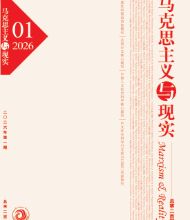
- No. 3 2026
- No. 2 2026
- No. 1 2026
- No. 6 2025
- No. 5 2025
- No. 4 2025
- No. 3 2025
- No. 2 2025
- No. 1 2025
- No. 6 2024
- No. 5 2024
- No. 4 2024
- No. 3 2024
- No. 2 2024
- No. 1 2024
- No. 6 2023
- No. 5 2023
- No. 4 2023
- No. 3 2023
- No. 2 2023
- No. 1 2023
- No. 6 2022
- No. 5 2022
- No. 4 2022
- No. 3 2022
- No. 2 2022
- No. 1 2022
- No. 6 2021
- No. 5 2021
- No. 4 2021