
No. 6 2025
CONTENTS
Special Feature: Essays on the Guiding Principles from the Fourth Plenary Session of the 20th CPC Central Committee
The 15th Five-Year Plan as a Critical, Pivotal Stage for Basically Realizing Socialist
Modernization // Cui Youping
The Rich Connotations of “Gradual Development” // Sun Laibin
Firmly Grasping the Historical Imperative of Achieving Common Prosperity for All //Ai Silin
Upholding the Two Integrations and Advancing Fiscal and Tax Reform in the 15th Five-Year Plan Period // Ma Haitao
Research on Xi Jinping Thought on Socialism with Chinese Characteristics for a New Era
The Inner Logic and Practical Requirements of Xi Jinping’s Major Discourses on Strengthening the Protection and Inheritance of Cultural Heritage // Wang Yonggui
Cultural Subjectivity as the Foundation of Common Prosperity in Cultural Life // Bai Lu
Research on the Chinese Compilation and Translation of Classical Marxist Works
Preface to Volume 22 of the Second Chinese Edition of The Collected Works of Marx
and Engels
Research on Fundamental Marxist Theories
Reflections on Free Time as a Space for Individuals’ Development // Chen Xinxia(37)
Modernity, Modernization, and Chinese Modernization: A Historical-Materialist Analysis // Bao Dawei
The Historical-Materialist Affirmation of Social Progress and Its Contemporary Implications // Han Sheng
Marx’s “Critique of List” and His Turn toward Communism // Lin Zhao & Feng Yinhu
From Machine Industry to Artificial Intelligence: A Critical Inquiry into Marx’s View of Technology // Li Ruiqi & Ding Xinye
Proletarian Identification in the Digital Age: Contemporary Reflections on Marx and Engels’ Theory of the Proletariat // Xu Weixuan
Research on Political Economy with Chinese Characteristics
Integrated Urban-Rural Development at the County Level in China: Internal Logic and Institutional Innovations // Chen Xiaofeng & Zou Yue
Empowering Leadership: How Party Building Enables Whole-Process Deliberative Governance in Rural Areas // Xu Qin
Dialogue and Interviews
Research on Engels’ Early Thought and Its Contemporary Significance: An Interview with Professor Michel Brie // Kang Xiaojing
Research on Political Communication
Insightful, Thorough, and Flexible Reasoning: Three Key Approaches to Unleashing the Potential of Political Communication Courses in the New Era // Fu Lisha & Liu Jia
Narratives of Storytelling: Practical Pathways for Building the Discursive Power of Marxist Ideology in the New Era // Chen Na
Special Studies: Issues Concerning The Communist Manifesto
“Working Men of All Countries, Unite!”: The Original Formulation and the Evolution of Its Chinese Translations—An Analysis of the Communicative Context of The Communist Manifesto in China // Zhang Lin & Sun Yu
The Conception of the Developmental Stages of the Future Society as Envisioned in The Communist Manifesto and Its Contemporary Significance // Ju Junjun
Research on Contemporary Capitalism
Developmental Trends, Formation Mechanisms, and Influences of Socialist Ideas among American Youth // Shang Hongjuan
The Rise of MAGA Communism and the Profound Dilemmas of the American Left // Men Xiaojun & Huang Lanlan
Research on Marxism Abroad
“Looking from Below Upwards”: An Analysis of the Conception of the People’s Subjectivity in British Neo-Marxism // Qiao Ruijin & Hu Xinyu
Rethinking Diagnoses of Acceleration and Structural Transformation in Modernity: A Study of the Theories of Modernity in Hartmut Rosa and Andreas Reckwitz // Mo Lei
The Evolution of the Frankfurt School’s Dimension of Critique of Political Economy // Shi Jingyu
Academic Developments
Several Issues in Promoting Holistic Research on Chinese Modernization // Xiao Guiqing & Lu Yang
2025 Cumulative Index
MAIN ABSTRACTS
The Inner Logic and Practical Requirements of Xi Jinping’s
Major Discourses on Strengthening the Protection and
Inheritance of Cultural Heritage
Wang Yonggui
Cultural heritage constitutes a living testament to the continuity of Chinese civilization and a distinctive marker of its cultural identity. As an integral component of Xi Jinping Thought on Culture, Xi Jinping’s major discourses on strengthening the protection and inheritance of cultural heritage offer a profound exposition of the goals, core values, methodologies, driving forces, and strategic vision underpinning cultural heritage work. These discourses are of vital significance for forging a strong sense of community for the Chinese nation, enhancing China’s cultural soft power, and advancing the development and progress of human civilization. In-depth study and implementation of Xi Jinping’s major discourses on cultural heritage should guide concrete practice in promoting holistic and systematic conservation, improving institutional and policy mechanisms for heritage protection, consolidating the talent base that undergirds this work, and harnessing digital technologies to raise the quality and efficiency of heritage safeguarding. In so doing, China’s cultural treasures can be effectively preserved, providing powerful cultural impetus for building a great country and realizing the rejuvenation of the Chinese nation.
Cultural Subjectivity as the Foundation of Common Prosperity in Cultural Life
Bai Lu
Cultural subjectivity refers to a nation’s historical consciousness of its intellectual richness and cultural confidence, and it embodies a civilizational mission to shape and elevate the dignity and quality of life of its people. As a concrete value practice through which the Chinese nation consolidates its cultural subjectivity, common prosperity in cultural life represents an ideal pursuit in building the cultural order of the Chinese people in the New Era and holds exemplary significance for overcoming the modern predicaments of cultural life. From the perspective of cultural subjectivity, the cultural values, ways of life, and collective character inherent in Chinese culture constitute the foundational order, practical logic, and national ethos of the Chinese people’s common prosperity in cultural life, thereby shaping its cultural structure and internal rationale of manifestation. From the historical vantage point of consolidating the cultural subjectivity of the Chinese nation, advancing common prosperity in cultural life for all Chinese people requires: grasping the convergence of collective cultural memory and shared life experience so as to facilitate the value-based legitimation of common prosperity in cultural life; promoting the interactive co-construction of shared cultural creativity and inclusive public culture to foster an ecological environment conducive to common prosperity in cultural life; and realizing the unity of cultural life patterns and civilizational narrative models so as to achieve the civilizational fulfillment of common prosperity in cultural life.
Reflections on Free Time as a Space for Individuals’ Development
Chen Xinxia
In the Marxist theoretical context, free time as a space for individuals’ development denotes time that is enjoyed by all and that enables individuals to pursue all-around development in the arts, sciences, and other domains, rather than leisure time in the ordinary, narrow sense. Free time can become a genuine space for individuals’ development only under specific conditions. Its transformation into such a space depends not only on appropriate material and institutional conditions, but also on people’s temporal consciousness and corresponding behavioral orientations. In contemporary China, in order to promote individuals’ development through free time, it is necessary to enhance the objective conditions by increasing the amount of free time available through scientific, technological, and economic progress, and to realize temporal justice by formulating and implementing fair and effective institutions and policies. It is also essential to cultivate individuals’ time consciousness and encourage them to use their free time actively to engage in activities at which they excel and that are imbued with meaning.
Integrated Urban-Rural Development at the County Level in China:
Internal Logic and Institutional Innovations
Chen Xiaofeng & Zou Yue
Integrated urban-rural development is a fundamental aspect of Chinese modernization, with the county level providing an important point of entry. Informed by Marxist theory on urban-rural relations, the internal logic of integrated urban-rural development at the county level in China can be characterized as a model that takes planning as the foundation, development as the core, and governance as the guarantee, driven by a “three-dimensional coordination” approach. To address current challenges—such as lagging urban-rural development planning, inadequate urbanization of county seats, insufficient funding for rural development, underdeveloped county-level industries that effectively benefit local residents, low efficiency in rural land use, and administrative inefficiencies—it is imperative to accelerate institutional innovation in county-level integrated urban-rural development. Priority should be given to refining county-level urban-rural development planning, strengthening institutional arrangements for promoting new urbanization, innovating diversified investment mechanisms for rural revitalization, improving support systems for county-level industries that benefit local populations, and deepening reform of the rural land system and county-level governance system. These measures will help unleash new drivers of integrated development and foster interlinked planning, collaboration shared growth, and coordinated governance between urban and rural areas.
“Looking from Below Upwards”: An Analysis of the Conception
of the People’s Subjectivity in British Neo-Marxism
Qiao Ruijin & Hu Xinyu
British Neo-Marxism, oriented toward the realization of scientific socialism, has pursued sustained reflection on core issues such as the formation of a revolutionary subject under conditions of advanced capitalism, the practical strategies for resisting capitalist domination, and the concrete trajectories of revolutionary struggle. Through this ongoing inquiry, it has gradually articulated a distinctively British, “looking from below upwards,” people-centered Marxist theory marked by several salient features. First, it seeks to rejuvenate progressive cultural traditions so as to reforge the class consciousness of the working class as the revolutionary subject. Second, it emphasizes conformity with the laws of social development, thereby enhancing the working class’s capacity for revolutionary agency. Third, it calls for the construction of broad social alliances to strengthen the working class’s anti-hegemonic and revolutionary capabilities. Collectively, these efforts have contributed to the elaboration of a more inclusive and dynamic theory of the revolutionary subject under advanced capitalist conditions, thereby advancing both the emancipation of the working class and broader processes of social development.
英文目录和摘要审校 童孝华
No. 6 2025
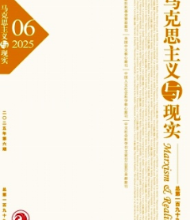
- No. 6 2025
- No. 5 2025
- No. 4 2025
- No. 3 2025
- No. 2 2025
- No. 1 2025
- No. 6 2024
- No. 5 2024
- No. 4 2024
- No. 3 2024
- No. 2 2024
- No. 1 2024
- No. 6 2023
- No. 5 2023
- No. 4 2023
- No. 3 2023
- No. 2 2023
- No. 1 2023
- No. 6 2022
- No. 5 2022
- No. 4 2022
- No. 3 2022
- No. 2 2022
- No. 1 2022
- No. 6 2021
- No. 5 2021
- No. 4 2021
- No. 3 2021
- No. 2 2021
- No. 1 2021